
It is being processed at the National Institute of Industrial Property (INPI) the request for granting the Geographical Indication (IG) of Garlic Roxo from Planalto Catarinense, in the Denomination of Origin category (DO). A GI indicates that that product has unique characteristics, resulting from weather conditions, relief and local know-how. A IG está sendo solicitada pela Cooperativa Regional Agropecuária do Meio Oeste Catarinense (Copper), which has the support of Epagri, Sebrae and UFSC in the process.
A solicitação apresentada ao INPI delimita a IG do Alho Roxo do Planalto Catarinense na área abrangida pelos municípios de Caçador, Lebon Régis, Friar Rogério, Fraiburgo, Monte Carlo, Brunópolis e Curitibanos. They are 482 producers who cultivate 1.314 hectares of vegetables. The region is the third largest garlic producer in Brazil, with approximately 12.000 tons harvested per year, that supply the national and international markets.
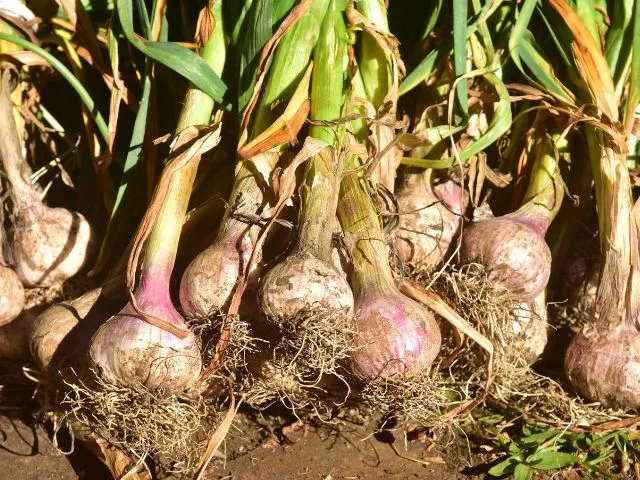
Hamilton Justino Vieira, Epagri researcher who is working on the IG process, explica que a região produz um alho diferenciado no país. Ele tem túnica branca, completely purple tooth film and less than 22 dentes bem formados. “Suas qualidades intrínsecas singulares o classificam como alho nobre”, scores.
Influence of the environment
Such characteristics arise from the environment where it is produced.. Recent research carried out by the Federal University of SC (UFSC) demonstram que as qualidades do garlic roxo do Planalto Catarinense são essencialmente ligadas ao meio geográfico, that in addition to coloring, influences the content of volatile compounds and anthocyanins.
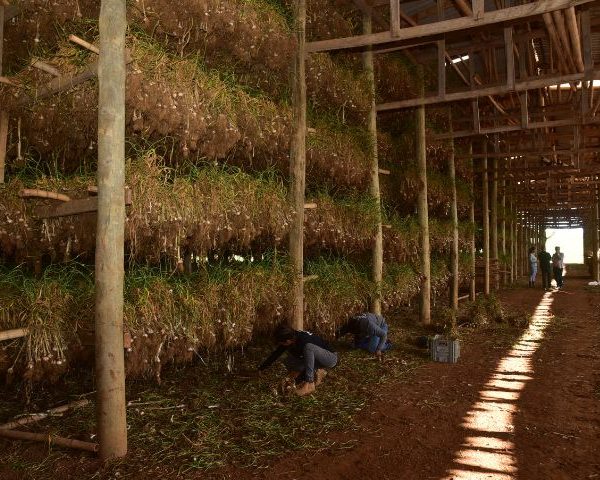
In addition to the edaphoclimatic conditions of the cultivation region, The management carried out by the farming families of Planalto Catarinense also influences the final product. “The post-harvest curing process, for more than three months in the shade, in sauces distributed in yards in the properties' warehouses, It is a unique practice of this territory that defines a unique rural landscape”, sentences the Epagri researcher.
Production began in the 1990s 1970
The production and selection of noble garlic in Santa Catarina began at the end of the 1990s. 1970, com o agricultor Takashi Chonan, seguido pelo agricultor Masanori Ito, both of Japanese origin. From there to here, production was essentially concentrated on family farming, which implies dedicated management and a sense of observation regarding cultivation. The result of this was the selection that gave rise to the seven varieties cultivated today in the region: This, Quitéria, Hunter, Contested, Jonas, Ito HF e Chonan. All derive from the Chonan variety, first registered purple garlic cultivar.
Epagri, Sebare and UFSC estimate that by the end of 2025 the INPI evaluated the process and defined the concession of the GI of Alho Roxo do Planalto Catarinense. At Epagri, the work involves extension workers from the municipalities covered by the GI and researchers from different units of the Company. These professionals acted as animators of the process and carried out the environmental characterization of the GI area, among other functions. Hamilton also reports that Epagri is producing a book that tells the story of purple garlic in Santa Catarina. The work is expected to be completed by the end of the year.
With information from Epagri – Photos: Aires Mariga